Daintree Rainforest Wildlife: Crocodiles, Cassowaries and What You Might See
The Daintree's wildlife from a Cairns trip: cassowaries, crocodiles, Bennett's tree-kangaroos, Boyd's forest dragons and rainforest birds, with where and when to look and how to stay safe.
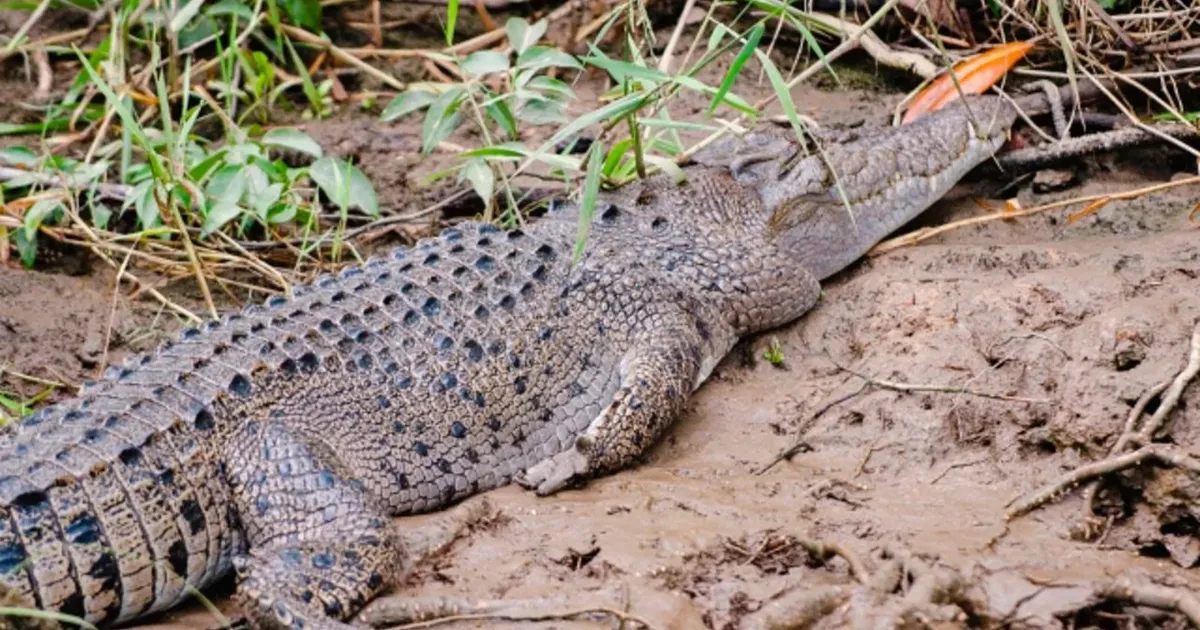
A southern cassowary can walk across the road in front of your car. A saltwater crocodile can lie almost invisible on a muddy Daintree River bank. And the piece of bark on a tree trunk at Jindalba may turn out to be a Boyd’s forest dragon looking back at you.
Then there are the animals most visitors never see at all: Bennett’s tree-kangaroos high in the canopy, musky rat-kangaroos in the leaf litter, bright kingfishers and nocturnal reptiles hidden in some of Australia’s densest rainforest. The Daintree is not a wildlife park. Nothing appears on schedule, and no guide can promise you a cassowary or a crocodile. You can improve your odds a lot by knowing where to look, when to go and which animals a day visitor is likely to see.
Quick answer: on a day trip from Cairns you will almost certainly see rainforest birds, butterflies and lizards. A crocodile is likely on a Daintree River cruise, especially from June to September. A cassowary is possible north of the river but never guaranteed, and Bennett’s tree-kangaroos live there too but are much harder to find. Queensland Parks lists cassowaries, tree-kangaroos and butterflies among the park’s wildlife.
Check Availability
Daintree wildlife at a glance
| Wildlife | Chance for a typical visitor | Good place to look | How to improve your odds |
|---|---|---|---|
| Southern cassowary | Possible but unpredictable | Cape Tribulation rainforest, roadsides and boardwalks | Early or late in the day; drive slowly |
| Saltwater crocodile | Good on a river cruise | Daintree River | Guided cruise, cooler months, low tide |
| Bennett’s tree-kangaroo | Difficult | Jindalba and Cape Tribulation rainforest | Scan the canopy quietly |
| Musky rat-kangaroo | Possible but easy to miss | Jindalba rainforest floor | Walk slowly and quietly |
| Boyd’s forest dragon | Fair, with a good eye | Tree trunks around Jindalba and other walks | Search trunks at eye level |
| Buff-breasted paradise-kingfisher | Seasonal and difficult | Lowland rainforest | Visit in the warmer months and listen for calls |
| Orange-footed scrubfowl | Common | Forest floor around boardwalks | Look and listen in the leaf litter |
| Australian brush-turkey | Common | Rainforest edges and picnic areas | An easy daytime sighting |
| Azure and little kingfishers | Possible | Daintree River and creeks | River cruise |
| Ulysses butterfly | Possible | Sunny gaps in the rainforest | Watch for a flash of electric blue |
The useful distinction is between wildlife that lives here and wildlife a day visitor is likely to see. A Bennett’s tree-kangaroo may live in the trees above the boardwalk you are on. That does not mean you will notice it.
If you have one day from Cairns and want the best general wildlife odds, a full-day tour with a river cruise and a rainforest boardwalk north of the ferry covers the two main habitats. The Daintree and Cape Tribulation 4WD Tour from Cairns ($168, rated 4.6 from 1,840+ reviews) spends an hour on the river looking for crocodiles and takes a 45-minute guided boardwalk walk, then stops at Cape Tribulation beach. It skips Mossman Gorge. Our guide to half-day vs full-day Daintree tours explains what a shorter tour leaves out.
Southern cassowary
The southern cassowary is the animal most travellers link with the Daintree. Adults can stand close to 2 m tall, with black plumage, a bright blue neck, red wattles and a helmet-like casque on the head.
Cassowaries matter to the forest as well as to photographers. They swallow large fruits whole and spread the seeds through the rainforest. Queensland Parks notes that they eat some fruits too large for most other animals, which lets them carry seeds a long way.
Where might you see a cassowary in the Daintree?
The Cape Tribulation section, north of the Daintree River, gives you the best chance on a trip from Cairns. Places where Queensland Parks mentions possible sightings include:
- Jindalba rainforest
- Dubuji Boardwalk
- the Kulki and Cape Tribulation area
- rainforest roads and forest edges north of the ferry
Jindalba stands out because the same patch of forest holds cassowaries, Bennett’s tree-kangaroos, musky rat-kangaroos and, in the warmer months, buff-breasted paradise-kingfishers. Our guide to Daintree rainforest walks has the lengths and access details for each boardwalk.
When are cassowaries easiest to see?
There is no reliable cassowary hour. Tropical North Queensland’s tourism body suggests early morning and late afternoon as good times in rainforest habitat.
Time in the right habitat helps more than the clock. A quick bus stop gives you a few minutes. A quiet boardwalk, a night at Cape Tribulation or a slower tour gives you many more chances.
If seeing a cassowary is your priority
- Spend your time north of the Daintree River.
- Walk quietly.
- Scan the forest floor and the road edges.
- Visit more than one rainforest area.
- Consider staying a night around Cape Tribulation.
- Treat any sighting as a bonus.
Cassowary safety: what to do if you see one
Cassowaries are wild and can injure people with their claws. Do not approach one. The Queensland Government’s advice:
- never feed them
- never approach them
- never approach chicks
- give the birds plenty of space
- drive slowly in cassowary habitat
- do not stop on the road unsafely for photos
If a cassowary comes towards you, stay calm, face the bird and back away slowly, ideally with a tree or your backpack between you and it. Never put yourself between chicks and their father: the male raises the young and defends them.
Saltwater crocodiles
Crocodiles are easier to look for than cassowaries. Boats run on the Daintree River all day, and the skippers know the resident animals and their usual banks.
The species is the estuarine or saltwater crocodile, which also lives in rivers and creeks well upstream of the sea. Tropical North Queensland’s tourism body names the Daintree River as one of the region’s main places to see wild crocodiles.
What’s the best way to see crocodiles?
Take a Daintree River wildlife cruise. Do not stand on a riverbank waiting for one to appear.
A boat puts you in crocodile habitat while a guide searches:
- exposed mud banks
- mangrove edges
- fallen trees
- shaded creeks
- known territories
- basking sites
Cruises often find kingfishers, herons and tree snakes as well. The cheapest way in is a one-hour cruise from the river if you have a car, such as the Daintree River Wildlife Experience Cruise ($25, rated 4.7 from 550+ reviews). Our Daintree River cruise page compares the operators, departure points and prices, so we won’t repeat that here.
Best time of year to see Daintree crocodiles
June to September is the best stretch. Bruce Belcher’s Daintree River Cruises, which has run on the river for decades, reports sighting success of about 98% in those cooler months, when crocodiles leave the water to bask. In the warmer months it puts the odds at closer to 50/50.
So you can still see crocodiles in summer. They are harder to find.
Does the tide matter?
Yes. A lower tide exposes more mud banks and resting spots, so crocodiles are easier to see. River operators say low tide helps with other wildlife too.
Don’t plan a whole trip around the perfect tide, though. These are wild animals.
Best combination for crocodile spotting
If your dates allow it: cooler months, a lower tide and a wildlife-focused river cruise. That is about as good as the odds get.
Can a Daintree River cruise guarantee a crocodile?
No. Several operators report very high success rates in good conditions, but nobody can promise where a wild animal will be at a given hour.
That uncertainty is part of the appeal. A wild crocodile lying still under the mangroves feels very different from one behind a fence.
Crocodile safety in the Daintree
This is the wildlife rule to take most seriously. Daintree National Park is crocodile country, and Queensland Parks asks visitors to:
- obey crocodile warning signs
- never swim in water where crocodiles may live
- stay well back from the water’s edge
- never feed crocodiles
- never interfere with them
- take extra care at night and during the breeding season from September to April
Do not assume water is safe because you cannot see a crocodile. That includes calm creeks, estuaries and beaches near creek mouths. For swimming, follow the current signs and park advice on the day, not an old blog post or social media tip.
Bennett’s tree-kangaroo
This may be the most surprising animal in the Daintree: a kangaroo that lives in trees. The species here is Bennett’s tree-kangaroo. Unlike the kangaroos of open country, it spends much of its life in the rainforest canopy, and it is hard to find.
Where can you see a Bennett’s tree-kangaroo?
Queensland Parks suggests watching for them around:
- Jindalba
- Kulki at Cape Tribulation
The Jindalba track notes ask walkers to watch the canopy for them, and Kulki lists them among the wildlife you may meet.
How do you spot one?
Don’t look for something hopping through the branches. Look for:
- a dark shape resting on a branch
- movement high in the foliage
- leaves moving when there is little wind
- a long tail hanging down
- an animal feeding quietly in the canopy
Binoculars help a lot here, and so does a guide who knows the shape to look for.
Musky rat-kangaroo
The musky rat-kangaroo is the opposite search: instead of looking up, look down. Queensland Parks notes that they are sometimes seen foraging on the forest floor around Jindalba.
They are small and much less dramatic than a cassowary or a crocodile, so most walkers go straight past. For wildlife fans, that is what makes spotting one memorable.
Spotting tip
Move slowly and stop walking every so often. Footsteps and conversation make small movements in the leaf litter much harder to pick up.
Boyd’s forest dragon
One of the most satisfying animals to find is also one of the best camouflaged. The Boyd’s forest dragon is a rainforest lizard of Queensland’s Wet Tropics, with an angular head, a spiny crest and textured skin.
The hard part is seeing it. Boyd’s forest dragons often sit almost motionless on tree trunks. Queensland Parks suggests looking for them, and for leaf-tailed geckos, around the Jindalba day-use area.
How to find one
Don’t scan the whole forest. Check tree trunks one at a time, especially:
- at about eye level
- beside the track
- near creeks
- on shaded trunks
Once someone points out your first one, you will wonder how you missed it. Then it moves two metres and seems to vanish again.
Birds of the Daintree
If you only look for cassowaries, you miss half the show. Queensland Parks records hundreds of bird species in Daintree National Park, from large ground birds to small kingfishers on the creeks. Even if you are not a birder, watch for these.
Buff-breasted paradise-kingfisher
This is one of the most striking birds in the forest, with orange underparts, blue upperparts and a very long white tail. Unlike the cassowary, it is not here all year: it flies in from New Guinea to breed in North Queensland during the warmer months.
That makes summer frustrating for crocodile spotting and exciting for birders. No single season suits every animal.
Pied imperial-pigeon
Another migrant from New Guinea, it arrives in large numbers from around August to feed on rainforest fruit. You may hear the activity in the canopy before you pick out a single bird.
Azure and little kingfishers
Watch the water. Azure kingfishers dart from branches over pools and creeks, and river cruises can also find the tiny little kingfisher. Queensland Parks mentions both around the waterways at Dubuji.
Orange-footed scrubfowl
You will probably hear these before you see them. They spend much of the day scratching noisily through the leaf litter, and they are far easier to see than the Daintree’s famous animals.
Australian brush-turkey
Another large ground bird, and one you should not have to work hard for. Brush-turkeys are around all year.
Butterflies, frogs, reptiles and the smaller animals
Not every Daintree sighting needs a 4 m crocodile. The smaller animals are often easier to find. Keep an eye out for:
- Ulysses butterflies
- leaf-tailed geckos
- skinks
- tree frogs
- pythons
- freshwater fish
- freshwater turtles
- spiders and large rainforest insects
The electric-blue flash of a Ulysses butterfly crossing a patch of sunlight is one of the best-known sights of the Wet Tropics. After rain, frogs and insects become a much bigger part of a walk.
The best places for wildlife in the Daintree
Jindalba
Our pick for an all-round rainforest wildlife stop. If you have limited time and want one easy place to slow down and look for forest animals, make it Jindalba. Queensland Parks mentions:
- cassowaries
- Bennett’s tree-kangaroos
- musky rat-kangaroos
- buff-breasted paradise-kingfishers
- Boyd’s forest dragons
- leaf-tailed geckos
The Jindalba Boardwalk is about 650 m return, and Queensland Parks suggests allowing about 45 minutes. Take longer if wildlife is the point of your visit.
Daintree River
Best for crocodiles and river birds. A cruise gives you the clearest wildlife goal of the trip: searching river habitat with someone who knows what lives there. We would book one before trying to find crocodiles on your own.
Dubuji Boardwalk
The easy rainforest and wetland walk at Cape Tribulation. Cassowaries are possible here, and Queensland Parks highlights kingfishers and orange-footed scrubfowl. It is close to Cape Tribulation, so it fits into a beach visit without a detour.
Kulki and Cape Tribulation
Wildlife with the classic Daintree view. At Kulki the forest runs right to the coast. Queensland Parks suggests watching for Bennett’s tree-kangaroos, cassowaries and, in season, paradise-kingfishers. From the lookout you may also see turtles, dolphins, dugongs and, in winter, migrating humpback whales offshore. Our Cape Tribulation beaches guide covers the walks between Kulki, Dubuji and Myall Beach.
When is the best time for Daintree wildlife?
There is no single best month for every species.
May to October: the best general conditions
The drier, cooler part of the year suits you if you care most about:
- crocodile spotting
- walking
- lower humidity
- easier road conditions
Crocodiles bask more in cooler weather, so cruises find them more easily.
What these months suit
Crocodiles: June to September.
General walks: the dry-season months.
Wildlife photography: usually easier, with less rain and humidity.
November to April: greener, wetter and different
The wet season brings different wildlife, and it is still a good time to go. The rainforest turns intensely green, and migratory birds such as the buff-breasted paradise-kingfisher arrive from New Guinea to breed.
Crocodiles are harder to see because warmer water means they spend less time basking on open banks. You also need to allow for heavy rain, fast-changing conditions and seasonal road problems. Our guide to the best time to visit the Daintree has the month-by-month rainfall and the stinger season.
What the wet season suits
- lush rainforest scenery
- frogs
- insects
- summer birdlife
- paradise-kingfishers
What it suits less
- predictable crocodile viewing
- travellers who dislike heat and humidity
Morning or afternoon: when should you look?
For forest wildlife, early morning and late afternoon both beat the middle of the day. The forest is cooler, there are fewer people about, and many animals are more active around the edges of daylight.
For crocodiles, tide and temperature can matter as much as the time on the clock. If a local operator recommends a cruise time because of the conditions that day, follow their advice over any fixed “9 a.m. is best” rule.
Is a wildlife tour worth it?
If wildlife is one of your main reasons for visiting, yes: a guide who knows what to look for is money well spent. The forest is very good at hiding things. A guide can’t produce animals on demand. What you get is:
- knowledge of the habitat
- knowledge of calls
- practice at spotting camouflage
- recent sightings
- an understanding of animal behaviour
- safe viewing habits
That makes the biggest difference for Boyd’s forest dragons, tree-kangaroos, small birds and nocturnal animals.
From Cairns, a couple of day tours add a wildlife park to the rainforest. The Wildlife Habitat, Mossman Gorge and Daintree Tour from Cairns ($182, rated 4.9 from 21 reviews, so still a small sample) spends about 75 minutes at the Wildlife Habitat in Port Douglas, then Mossman Gorge and an hour on the river. The Daintree Wilderness and Cape Tribulation Coach Tour from Cairns ($168, rated 4.6 from 270+ reviews) also visits the Wildlife Habitat and continues across the ferry, in a day of about 13 hours. The Wildlife Habitat keeps rainforest animals in large enclosures, so it is the surest way on these trips to see a cassowary up close.
Guided wildlife tour vs normal Daintree day tour
They are not always the same product.
| Standard Daintree day tour | Wildlife-focused tour | |
|---|---|---|
| Mossman Gorge | Often | Sometimes |
| Cape Tribulation | Usually | Often |
| Daintree River cruise | Common | Common, sometimes longer |
| Main aim | See the Daintree highlights | Find wildlife |
| Time spent waiting quietly | Limited | More |
| Bird identification | Basic | Usually better |
| Nocturnal species | Unlikely | Possible on night tours |
| Best for a first visit | Yes | Yes, for nature lovers |
If you have one day from Cairns and want the main sights, choose a full-day Daintree and Cape Tribulation tour with a river cruise; our Daintree and Cape Tribulation day trip guide walks through that day. If you have already seen the highlights, or wildlife is your main interest, look at something more specialised.
Is a Daintree night tour worth doing?
For wildlife fans, very much so. Much of the rainforest’s wildlife is easier to find after dark, and night walks turn up animals a Cairns day tour rarely meets:
- frogs
- geckos
- sleeping birds
- spiders
- nocturnal mammals
- snakes
- other reptiles
The advantage is a guide who knows where to point the torch. The Cape Tribulation Rainforest Night Walk ($39, rated 4.7 from 110+ reviews; our breakdown) follows a level boardwalk with a naturalist guide; past walkers report tree frogs, owls, bats, glowing fungi and the odd tree-kangaroo or sleeping cassowary.
On a first visit with only a day, we would still put the daytime Daintree first. If you are spending a night or two around Cape Tribulation, a night walk adds a whole different side to the trip.
Can you see wildlife on a self-drive trip?
Yes, if you stop treating the day as a checklist. If your day runs car, viewpoint, photo, car, boardwalk, photo, car, you will see very little. Instead:
- Walk slowly.
- Stop often.
- Listen.
- Scan tree trunks.
- Look into the canopy.
- Watch the leaf litter.
- Spend 30 minutes where others spend 10.
- Carry binoculars.
Driving yourself has one big wildlife advantage: time. If something interesting appears, you don’t have to get back to a tour bus. Our comparison of a Daintree tour vs self-drive from Cairns covers the ferry, the road and the hire-car rules.
Can you see Daintree wildlife on a day trip from Cairns?
Yes. A good one-day wildlife route runs:
Cairns, Mossman, Daintree River cruise, ferry, Jindalba, Dubuji or Kulki at Cape Tribulation, back to Cairns.
The trade-off is time. The farther north you go, the less time you have to stop and look. One day works for sightseeing. For serious wildlife watching, a night north of the Daintree River is much better: you get the early morning and the evening, two of the best viewing times, without a long drive back to Cairns.
What wildlife are you likely to see at Mossman Gorge?
Mossman Gorge is superb rainforest, but we wouldn’t choose it for the best odds on crocodiles or cassowaries. What it offers is broader:
- rainforest
- forest birds
- butterflies
- reptiles
- freshwater habitat
- the Mossman River
- Aboriginal cultural interpretation
For a wildlife-heavy day, pair Mossman Gorge with Jindalba or Cape Tribulation and a Daintree River cruise. Our Mossman Gorge guide has the shuttle, walks and swimming rules.
Can you see crocodiles at Cape Tribulation beaches?
Crocodiles live along the coast and in the estuaries of Far North Queensland, so never judge water safety by how it looks. Queensland Parks treats the Daintree as crocodile country and asks visitors to stay out of crocodile habitat and back from the water’s edge where warnings apply.
Marine stingers also occur in coastal waters, mostly in the warmer months. Cape Tribulation’s beaches are beautiful, but they are not an unsupervised swimming pool.
What should wildlife photographers bring?
You don’t need professional gear, but a few things help:
- binoculars
- a camera with some zoom
- a lens cloth
- rain protection for your camera
- a spare battery
- insect repellent
- drinking water
- quiet shoes with good grip
A phone works well for a cassowary standing in decent light. It is much less useful for a tree-kangaroo half hidden 15 m above you.
Ethical wildlife viewing in the Daintree
Wildlife tourism only works if the animals stay wild. Don’t:
- feed animals
- chase them for photos
- crowd cassowaries
- block animals crossing roads
- play recorded calls to attract birds
- touch reptiles
- approach crocodiles
- leave food scraps
- leave rubbish
Feeding cassowaries is dangerous and illegal. Birds that link people or cars with food become more aggressive and are more likely to be hit on the road. The best encounter is one where the animal barely notices you are there.
Which Daintree animals are easiest to see?
For most visitors, the realistic order runs like this.
Easier
- orange-footed scrubfowl
- brush-turkeys
- butterflies
- common rainforest birds
- small lizards
A fair chance with the right activity
- crocodiles on a Daintree River cruise
- kingfishers
- Boyd’s forest dragon
Possible but unpredictable
- cassowary
Difficult
- Bennett’s tree-kangaroo
- musky rat-kangaroo
- rarer rainforest birds
Specialist territory
- most nocturnal mammals
- rare reptiles
- shy or very local bird species
Many Daintree wildlife lists give the impression you will meet every famous species in one afternoon. You won’t, and that’s fine.
Can you see all the major Daintree wildlife in one day?
Almost certainly not. A great wildlife day might bring a crocodile, several kingfishers, scrubfowl, butterflies, a Boyd’s forest dragon and, with luck, a cassowary. Another visitor on the same route might see no cassowary and no large crocodile at all.
If seeing several rare species matters to you, add time in the habitat instead of adding more stops.
Best Daintree wildlife experience for different travellers
If you mainly want to see a crocodile
Book a Daintree River wildlife cruise. It is far more reliable than looking for one yourself. With a car, the Crocodile Express Daintree River Wildlife Cruise ($28, rated 4.6 from 470+ reviews) and the Daintree River Wildlife Cruise with Bruce Belcher ($31, rated 4.6 from 150+ reviews) both run about an hour.
If you mainly want to see a cassowary
Spend more time north of the Daintree River, on the rainforest walks around Cape Tribulation, and consider staying a night. Never chase or approach one.
If you’re a birder
Allow much more time than a standard sightseeing tour gives you. Look for specialist river cruises and guided rainforest walks.
If you’re travelling with children
A short rainforest boardwalk plus a Daintree River cruise usually works better than a long wildlife walk. A tour with Mossman Gorge and an hour on the river, such as the Daintree and Mossman Gorge Day Tour from Cairns ($168, rated 4.6 from 3,050+ reviews), covers both.
If you’re a photographer
Drive yourself, or pick a small-group tour with longer stops. Our small-group Daintree tours page lists the ones with group caps.
If you’re serious about wildlife
Stay overnight at Cape Tribulation and add a guided night walk.
Our verdict: is the Daintree good for wildlife watching?
Very good, as long as you enjoy finding wild animals and don’t expect guaranteed encounters. A dragon appears only after you have stared at a tree for a minute. A tree-kangaroo is a shadow in the canopy. A cassowary steps silently out of the forest and disappears again, and the log on the riverbank opens one eye.
For a first visit, combine three things:
- a Daintree River cruise
- a slow rainforest walk at Jindalba or Cape Tribulation
- enough time that you are not racing back to Cairns
If wildlife matters more than ticking off sights, a night around Cape Tribulation is better still.
Frequently Asked Questions
What animal is the Daintree Rainforest famous for?
The southern cassowary is its best-known land animal, and the Daintree River is famous for saltwater crocodiles.
Are there crocodiles in the Daintree Rainforest?
Yes. Estuarine crocodiles live in the rivers, creeks and coastal waters of the region, and the Daintree River is a major place for guided crocodile cruises. Follow the Crocwise safety advice around any water.
Are cassowaries common in the Daintree?
They live in the Daintree rainforest, but sightings are unpredictable. Cape Tribulation and the rainforest north of the Daintree River give you the best chance, especially if you walk quietly instead of rushing between stops.
Are there tree-kangaroos in the Daintree?
Yes. Bennett’s tree-kangaroos live in the Cape Tribulation section, and Queensland Parks mentions possible sightings around Jindalba and Kulki.
Can you see crocodiles from the Daintree ferry?
You might see wildlife around the river, but don’t count on it. A wildlife cruise with a guide gives you a much better chance.
What is the best time to see crocodiles in the Daintree?
The cooler months, June to September, when crocodiles spend more time basking. Lower tides also expose more of the banks where they rest.
What is the best place to see Daintree wildlife?
Jindalba is one of the best places for rainforest wildlife, and the Daintree River is the obvious choice for crocodiles and river birds.
Do I need a wildlife guide?
No, but a good guide makes a big difference for camouflaged, distant or easily missed animals.
Is the Daintree safe from dangerous animals?
The Daintree is safe to visit if you follow the usual precautions and official advice, but it has real wildlife hazards. Take crocodile warnings, cassowary advice and marine stinger information seriously.
Quick planning summary
For crocodiles: a Daintree River cruise, best from June to September.
For a rainforest wildlife walk: Jindalba.
The animal everyone hopes for: the southern cassowary.
The surprise: Bennett’s tree-kangaroo.
The camouflage challenge: Boyd’s forest dragon.
For birders: the warmer months, when the paradise-kingfishers arrive.
The strategy: slow down.
The upgrade: a night at Cape Tribulation and a guided night walk.
The rule: never feed or approach wildlife.
To compare the full-day tours that include a river cruise, see which Daintree tour from Cairns is right for you.
Mossman Gorge, the River and Cape Trib in One Day
Hotel pickup in Cairns, a Welcome to Country at Mossman Gorge, a Daintree River croc cruise, lunch, and Cape Tribulation beach. Rated by nearly 3,000 guests, with free cancellation.
Check Availability & Book