Daintree Cyclone Season: What Travellers Need to Know
Cyclone season in the Daintree runs from 1 November to 30 April. How the warning levels work, how a cyclone affects Cape Tribulation tours, roads and the ferry, and what to do if a warning is issued.
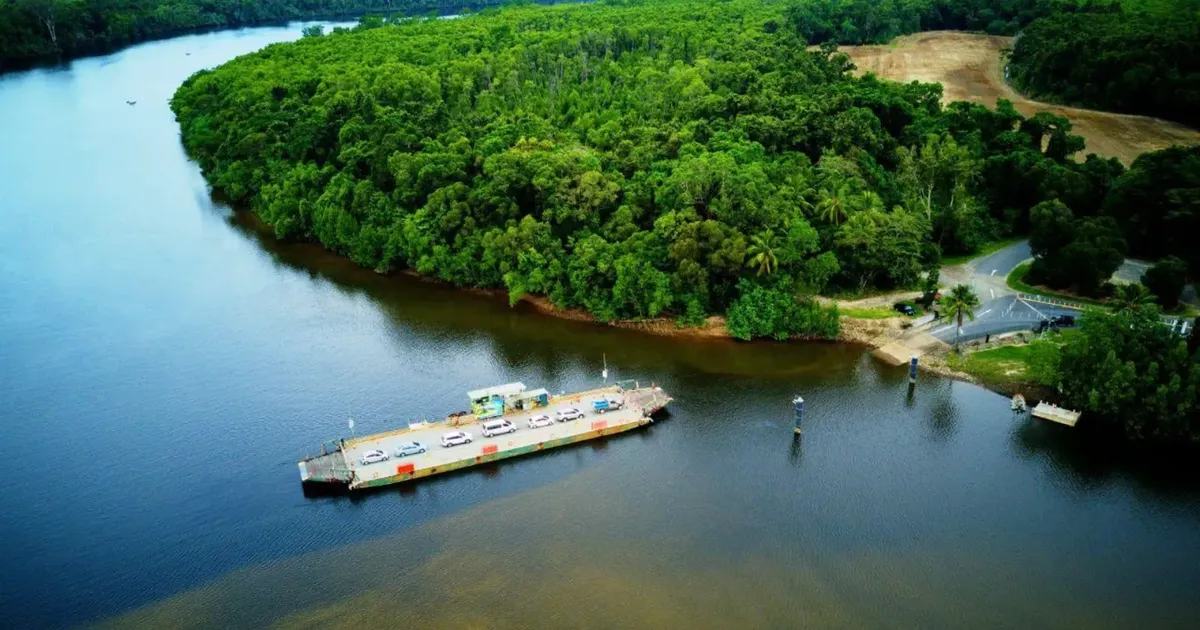
You can visit the Daintree Rainforest during cyclone season, as long as your plans can bend and you check the official warnings. Queensland’s tropical cyclone season runs from 1 November to 30 April. That does not mean a cyclone is heading for the Daintree on any given day, and tours do not stop for six months. It does mean a trip to Mossman Gorge, the Daintree River and Cape Tribulation can be hit by severe weather, heavy rain, flooding and closed roads.
The warmer, wetter months are when the rainforest looks its greenest: creeks run full and cloud sits on the ranges. Before you book, ask whether you can reach the places you want to see safely, and what you will do if conditions change.
Check Availability
Before you go: this guide helps you plan; it does not report live warnings, and conditions can change within hours. Check the Bureau of Meteorology cyclone page, the Douglas Shire disaster dashboard, QLDTraffic, the Daintree Ferry and Queensland Parks alerts before you set off, and follow official directions and your tour operator’s or host’s safety instructions. Never travel into an affected area against a warning or a closure.
When is cyclone season in the Daintree?
Queensland’s official cyclone season runs from 1 November to 30 April, and a cyclone can occasionally form outside those dates. Cape Tribulation and the Daintree Coast sit in tropical North Queensland, where cyclones, tropical lows and the heavy rain they bring are the main seasonal hazards.
Cyclone season is not a six-month cyclone warning. On most days there is no cyclone anywhere near. A system also does not have to cross Cape Tribulation to cause trouble: heavy rain, rising rivers, damaged roads or a stopped ferry can affect your trip when the centre of the storm is some distance away. In December 2023 the floods after Tropical Cyclone Jasper badly damaged the Daintree coast road and closed Mossman Gorge until February 2024. In March 2026 floodwater from Tropical Low 29U, which never became a named cyclone, left the Daintree River ferry hanging from one cable and out of service for weeks.
| Month | What cyclone season means for your plans |
|---|---|
| November | The cyclone season starts on 1 November. It is the build-up to the wet: carry a wet-weather plan, but do not expect a cyclone or constant rain. |
| December | Hot, humid and changeable. Over Christmas, check each tour’s holiday schedule and cancellation rules. |
| January | Allow for heavy rain, flooding and changes to roads and tours. |
| February | Keep allowing for rain and disruption, and check conditions day by day. |
| March to April | The season runs to 30 April, and conditions vary a lot from one year to the next. |
Monthly rainfall and rain days are in our Daintree wet season guide, and the month-by-month picture is in our guides to the Daintree in November, December, January and February.
Is the Daintree safe to visit during cyclone season?
Often, yes, when no severe weather threat, closure or official instruction affects your route. Look at the forecast and the conditions along your itinerary on the day, not at whether your holiday falls between November and April.
Keep four situations apart:
- Ordinary tropical showers: a tour usually runs as normal or with small changes. Rain on its own does not make a tour unsafe.
- Persistent heavy rain or local flooding: river crossings, roads, tracks and outdoor activities can be affected without any named cyclone.
- A tropical low or cyclone developing nearby: follow the forecast track and timing closely, because the risk shifts as forecasts update.
- An official warning, an evacuation instruction or a closed road: change or drop the sightseeing and follow local authorities. A booking never overrides an emergency direction.
Wind is only part of the danger. Floodwater, fallen trees, landslips, power cuts and blocked roads can affect a rainforest trip before and after the worst of a storm, and storm surge can reach low-lying parts of the coast.
Never drive, walk or swim through floodwater, even if the road looks shallow, a map app still shows it open or other drivers are crossing. Stay off closed national park tracks, and do not go looking for a viewpoint during a warning.
Cyclone warnings versus rainy forecasts
A rain icon on your phone is not a cyclone warning. The Bureau of Meteorology publishes the forecasts, the tropical cyclone information and the cyclone warnings themselves. On top of those, Queensland’s local governments issue warnings under the Australian Warning System, which has three levels that tell you what to do:
| Warning level | What the official wording says | What it means for a visitor |
|---|---|---|
| Advice (yellow) | An incident has started; there is no immediate danger | Stay up to date, and check your accommodation and travel plans |
| Watch and Act (orange) | There is a heightened level of threat; conditions are changing | Start taking the recommended actions now |
| Emergency Warning (red) | The highest level; you may be in danger | Act immediately, which may mean sheltering or evacuating as directed |
The levels tell people how to respond to a hazard; they do not predict whether a particular tour will run. Read the whole warning, including its area, time and instructions. The Australian Warning System does not replace Bureau of Meteorology warnings: use the two together.
The Queensland Disaster website’s warnings page explains the system, and Get Ready Queensland’s warnings and alerts page lists who issues what. During severe weather, go by the latest official notices; a screenshot passed around without a time stamp may be hours out of date.
How can cyclones affect Daintree tours from Cairns?
A full-day tour usually leaves Cairns, drives north past Port Douglas and Mossman, stops at Mossman Gorge, cruises the Daintree River and crosses by ferry to Cape Tribulation. Weather and road conditions can differ at each point along that route, so a disruption hits each kind of tour differently:
- Cape Tribulation tours depend on the ferry and the roads north of it, and can be delayed, changed or cancelled if either is unsafe or closed. Our pick: the Daintree and Cape Tribulation 4WD Tour from Cairns, from US$168, 4.6/5 from more than 1,800 reviews.
- Mossman Gorge tours may skip the ferry but still need the highway open and the gorge open. We’d choose the Daintree and Mossman Gorge Day Tour from Cairns, from US$168, 4.6/5 from more than 3,000 reviews.
- Daintree River cruises depend on river conditions and each operator’s call. A cruise that runs in rain will not necessarily run in a flood. On the river, our pick is the Daintree River Wildlife Experience Cruise, from US$25, 4.7/5 from more than 550 reviews.
- Rainforest night walks can be moved or cancelled for storms, wet tracks or access limits. For a night walk, try the Cape Tribulation Rainforest Night Walk, from US$39, 4.7/5 from more than 100 reviews.
- Small-group and 4WD tours use different vehicles, but no vehicle may cross a closed road or floodwater, so a 4WD tour is not cyclone-proof. Our pick for a small group: the Small-Group Cape Tribulation and Mossman Gorge Tour from Cairns, from US$191, 4.6/5 from more than 950 reviews.
Pick an operator for clear communication, sensible alternatives and written cancellation and rescheduling terms, not for a promise to run in any weather. Our guide to whether Daintree tours run in the rain covers how operators decide and what each tour type does on a wet day.
What if the operator says the tour is still running?
Ask which main stops are planned, whether the ferry and roads are open and whether any park closure affects the day. Operators use local knowledge to adjust a trip, but official restrictions and safety directions come first. If an emergency warning covers the place you are staying, stay put even if your tour has not yet sent a cancellation; contact the operator when it is safe and follow the authorities.
Can you drive from Cairns to Cape Tribulation in cyclone season?
Sometimes, but a route that looks normal on a map may not be safe that day. The drive north follows the Captain Cook Highway through the Douglas Shire to the Daintree River ferry, and floods, heavy rain or storm damage can cut it at several points.
Before you drive:
- Check QLDTraffic for road closures and flood warnings.
- Check the Douglas Shire disaster dashboard for local warnings and affected roads.
- Check the Daintree Ferry for the current service as well as the timetable.
- Check Queensland Parks alerts for the tracks and day-use areas you plan to visit.
- Check the Bureau of Meteorology forecasts and warnings for each place on your route, and ask your accommodation for local advice.
Do not drive into an affected area to beat a storm. If authorities advise people to leave early, go while the safe routes are still open. An extra night in Cairns or a rearranged sightseeing day is better than being cut off.
The ordinary route, distances and stops are in our Cairns to Cape Tribulation road-trip guide, and our tour vs self-drive comparison works through the costs. For road checks and closures outside a cyclone warning, see our wet-season driving guide.
What happens to the Daintree River ferry in bad weather?
The cable ferry is the only road link between the south bank of the Daintree River and Cape Tribulation. It normally runs from 5am to midnight every day, Christmas Day included, but flooding and mechanical faults can stop it, as the March 2026 flood showed. The operator’s ferry information page carries the latest service status.
Check three things separately:
- Published hours give the normal schedule.
- Live ferry status tells you whether the ferry is running now.
- Road status north of the river tells you whether you can carry on once you are across.
A running ferry does not mean every road, boardwalk, attraction or lodge beyond it is open.
If you stay north of the river, plan for the chance that you cannot leave on the day you intended. Ask your accommodation about its emergency arrangements, supplies and communications before you go, and if you fly out straight after your Daintree stay, consider a buffer night back in Cairns. Our Daintree River ferry guide covers the crossing in normal conditions.
Will Mossman Gorge and Cape Tribulation close for a cyclone?
Individual sites close when conditions turn unsafe, but Daintree National Park does not have one open-or-closed switch. Mossman Gorge and Cape Tribulation are separate sections, and a closure can apply to a single track, facility, camping area or access road.
Check the Daintree National Park page and the park alerts on the day you travel. Heavy rain makes river edges, rocks and walking surfaces dangerous, even where the scenery looks inviting.
Planned closure, 9 November to 15 December 2026: Queensland Parks has closed the Mossman Gorge Rainforest circuit for track upgrades. This is a scheduled closure, not a cyclone closure. The day-use area, the Lower river track, the Baral Marrjanga boardwalk and the Rex Creek bridge track, with its swing bridge, stay open. Bad weather can extend the closure, so check the park alert before you go.
On the beaches at Cape Tribulation, a calm-looking sea does not make swimming safe. Queensland Parks warns of crocodiles and marine stingers, and stinger season runs from about November to May. Stay out of the water where those hazards exist and follow the posted signs. Our Cape Tribulation beaches guide covers each beach.
Day tour or self-drive in cyclone season?
For many first-time visitors staying in Cairns, a guided tour is the simpler choice, because the operator plans the route, does the driving and makes the call on the day. It does not remove the weather risk, and no operator can reach a closed site.
| Consideration | Guided tour | Self-drive |
|---|---|---|
| Route and stops | The operator sets or adjusts the itinerary | You decide, within road and park closures |
| Weather monitoring | The operator checks whether the day can run; you still follow official warnings | You watch the warnings and access yourself |
| Ferry and road closures | The operator may change, reschedule or cancel | You arrange your own alternative |
| Flexibility on the day | Set by the itinerary and the group | More flexible when conditions are safe |
| Money at risk | Set by the operator’s and booking platform’s terms | Car hire, accommodation and unused bookings may still cost you |
| Suits | Visitors who want the logistics handled | Experienced travellers happy to check conditions and change plans |
If Cape Tribulation is the stop you most want, check that the tour crosses the Daintree River. Some tours named “Daintree” spend the day at Mossman Gorge and south of the river, so read the full itinerary.
Before you pay, ask whether a severe-weather cancellation by the operator gets you a refund or a new date, what happens if only part of the itinerary runs, and whether you can cancel free of charge if the rest of your trip changes. Keep the policy in writing. Our guide to Daintree tours in the rain sets out the operator-cancels and you-cancel cases side by side.
How far ahead will you know if your trip is affected?
You cannot count on a fixed number of days’ notice that a cyclone will disrupt a particular tour. Forecasts and tracks change as a system develops, and seasonal outlooks help with general preparation but cannot tell you whether a January departure will go ahead.
A practical checking routine:
- When you book: cancellation rules, travel insurance exclusions, flexible accommodation and a spare sightseeing day.
- A few days before: Bureau of Meteorology forecasts and warnings, and messages from your operator.
- The evening before: road, ferry and park alerts, and any message from your operator or host.
- On the day: the latest official instructions and confirmed pickup or cancellation notices.
Do not rely on an old social media post saying a road has reopened. Repairs and roadworks can carry on for months after a storm.
What to pack and prepare for a cyclone-season trip
For an ordinary wet-season day trip, pack a light rain jacket or poncho, shoes with good grip, quick-drying clothes, water, sunscreen, insect repellent and a dry bag for your phone, medication and documents, plus a charged phone and a power bank. The full list is in our Daintree packing guide.
If you are staying overnight somewhere remote, ask your host what emergency supplies and communications they have. Queensland’s visitor safety advice is to keep essential belongings with you, follow local advice and have several days of essentials during severe weather. Allow for medication, children and any accessibility needs.
Before you travel, also sort out:
- An offline copy of your accommodation details and booking contacts.
- A way to get official warnings that does not rely only on patchy mobile coverage.
- What your travel insurance says about named storms, travel disruption and events already forecast when you bought it.
- Spare days where a postponed tour would still fit your Cairns trip.
- A plan to stay in safe accommodation, and to move only when instructed, during severe weather.
If an Emergency Warning is issued, do not finish your sightseeing, photograph storm damage or look for a better viewpoint. Follow the instructions in the warning. In a life-threatening emergency in Australia, call 000.
If a cyclone warning is issued while you are in Cape Tribulation
The right response depends on the warning, where your accommodation is, the roads and local instructions. A last-minute drive out can be more dangerous than a suitable shelter, but if authorities call for an early evacuation, staying put is the wrong choice.
- Read the whole warning and follow instructions from local emergency services.
- Ask your host or manager what their emergency procedure is.
- Check the current road information before any journey, and never enter floodwater.
- Keep medication, water, documents and a charged phone within reach.
- When it is safe to do so, tell your tour operator if the warning or official directions stop you attending.
- Wait for the official all-clear or access update before you go sightseeing again. Hazards remain after the weather clears.
Get Ready Queensland’s advice for visitors during severe weather is the source to follow in an emergency, ahead of any travel guide, this one included.
Other things to do if Cape Tribulation is cut off
There are other options, but only in places the authorities confirm are safe and open. A change of plan is not a reason to drive around a closure or to assume Cairns attractions are unaffected.
If the ferry is closed but Cairns and Port Douglas are safe, ask your operator about an itinerary south of the river, move the Cape Tribulation day later in your stay, or pick another sight in the region. Mossman Gorge, Kuranda and the reef each have their own weather, transport and operator rules. A reef trip is not an automatic wet-weather swap, because sea conditions can be dangerous too.
Our Daintree wet season guide has more on planning around rain, and our best time to visit guide compares the wet and the dry.
Where to check cyclone and access information
For live status, bookmark these official and operator sources:
| Information you need | Source | What to check |
|---|---|---|
| Cyclone forecasts and warnings | Bureau of Meteorology | Current warnings, forecast track, timing and area |
| Queensland weather warnings | BoM Queensland | Severe weather and heavy rain |
| Local disaster instructions | Douglas Shire disaster dashboard | Local warnings, closures and evacuation information |
| Road closures | QLDTraffic | Current restrictions and flooding |
| Daintree River crossing | Daintree Ferry | The operator’s latest service status |
| Walking tracks and park facilities | Queensland Parks alerts | Track, park and facility closures |
| Visitor preparation | Get Ready Queensland | Personal preparation, insurance and warnings |
Check the time stamp and the exact area of each notice. A warning for another part of Queensland may not apply to the Daintree, and no named cyclone does not mean no local flood risk.
Booking a Daintree tour in cyclone season
Book the Daintree in cyclone season if you can keep your dates loose and are ready to put safety ahead of sightseeing. The rainforest is at its greenest in these months, and most days bring no extreme weather at all. A day tour is a good booking when you know the operator’s terms, accept that the route can change and know where to check the official information.
If your time is short, a guided Daintree tour from Cairns takes the driving and the ferry off your hands; choose an itinerary that covers the stops you care about and read the cancellation policy. If Cape Tribulation is essential, book it early in your Cairns stay so a spare day remains, and remember that a cancelled tour may not have a free seat later in the week.
Enjoy the rain when it is safe, and do not chase a cyclone, a flood or a closure to keep an itinerary.
Frequently asked questions
Is November to April a bad time to visit the Daintree Rainforest?
Not for everyone. It is the official cyclone season and overlaps the wet, so access is less certain than between May and September. If you love lush scenery and can keep your dates flexible, it can be a good time to go. If you have one fixed day and Cape Tribulation is a must, weigh the risk of disruption before you book.
Does a cyclone hit the Daintree every year?
No. Cyclone numbers and tracks vary from year to year, and the season is the period when cyclones can form, not a forecast of one reaching the Daintree.
Are Daintree tours cancelled during cyclone season?
There is no seasonal shutdown. Tours run when conditions are safe, including on many rainy days, and single departures can be changed or cancelled for weather warnings, flooding, a ferry closure, unsafe tracks or closed roads. A named cyclone is not needed for that: heavy rain alone can stop a tour. Confirm with your operator the evening before.
Is Cape Tribulation accessible during cyclone season?
On many days, yes, but check the ferry and the roads. The ferry normally runs every day from 5am to midnight, and that schedule does not hold during floods or severe weather.
Will a 4WD tour still go ahead during a cyclone?
Do not count on it. A 4WD vehicle may not use a closed road or cross floodwater any more than a car can, and a responsible operator changes or cancels the day when conditions are unsafe.
Should I cancel my trip as soon as the forecast shows rain?
No. Look for actual warnings or access problems first, then read your operator’s cancellation terms. If an official warning covers your location, follow its directions whatever your booking says.
Can I get a refund if a cyclone cancels my tour?
It depends on the operator’s written terms, where you booked and what happened. An operator cancellation, a cancellation by you and a shortened itinerary can each be handled differently. Contact the seller and your insurer, and keep the cancellation message. Our guide to Daintree tours in the rain covers the cases.
Is Cairns safer than Cape Tribulation during cyclone season?
The place name alone does not tell you. The risk depends on the storm, your exact location, your accommodation and the official advice. Cairns has more services, while Cape Tribulation depends on one ferry and one road, but severe weather can affect both. Follow the warnings for where you are.
What if the ferry closes after I have crossed the river?
Do not try another way across. Follow the authorities and your accommodation’s directions, and expect your departure date to move. Keep your airline, car hire company and accommodation informed when it is safe to call.
Should I stay overnight in the Daintree in January or February?
An overnight stay can be rewarding, but it makes you more dependent on the ferry, the road and your host’s emergency arrangements. Check your host’s preparations and cancellation policy, and leave a gap before your flight. A day tour from Cairns is easier to move for some travellers, though it still depends on conditions.
Is it safe to visit the beaches during cyclone season?
A beach walk can be fine in calm conditions, but keep away from rough surf, storm surge and any coast under a warning. Swimming is a separate question: crocodiles and marine stingers live in these waters, so follow the park signs and local warnings.
Where can I see the current cyclone warning for the Daintree?
Start with the Bureau of Meteorology cyclone page and the Douglas Shire disaster dashboard. Check the date, time, area and instructions of each warning.
Official sources and further reading
- Get Ready Queensland: cyclone and storm surge: the cyclone season dates and the hazards.
- Bureau of Meteorology: tropical cyclones: cyclone forecasts and warnings.
- Queensland Disaster website: watch for the warnings: the three Australian Warning System levels.
- Get Ready Queensland: warnings and alerts: who issues which warnings.
- Get Ready Queensland: during severe weather: what visitors should do.
- Queensland Parks: Daintree National Park: park information and alerts.
- Queensland Parks: visiting Daintree safely: access and hazards.
- Queensland Department of Transport and Main Roads: road and traffic information: road closures and QLDTraffic.
- Daintree Ferry: hours and the latest service status.
- Douglas Shire Council: local notices and emergency information.
Mossman Gorge, the River and Cape Trib in One Day
Hotel pickup in Cairns, a Welcome to Country at Mossman Gorge, a Daintree River croc cruise, lunch, and Cape Tribulation beach. Rated by nearly 3,000 guests, with free cancellation.
Check Availability & Book